Thursday November 19, 2026
The protector: What neurodiversity can teach us about psychological safety
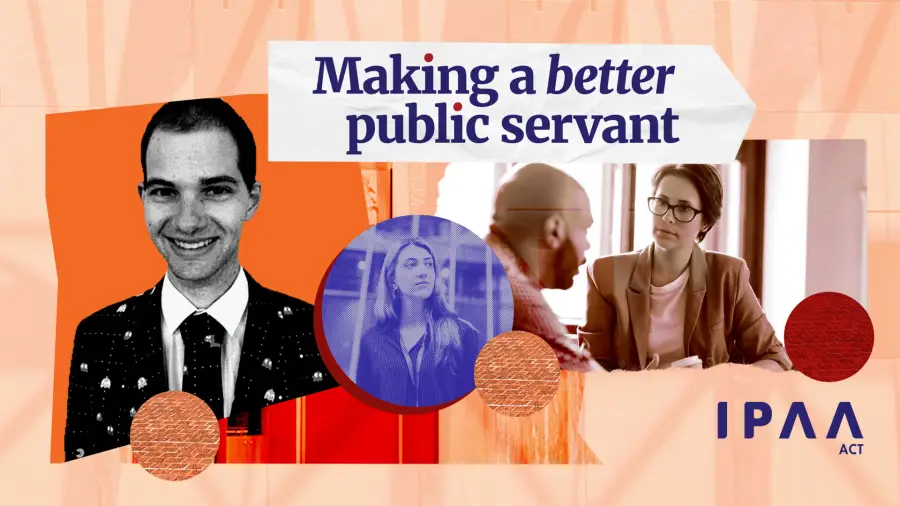
When I moved to Canberra in 2022, I asked myself, “How can I harness my autistic strengths to thrive here?”
I grew up in Adelaide and first moved interstate in 2017. I only lasted four months, primarily because I did not build good support networks that are imperative for navigating a new city and a new job (stressful life experiences for anyone, let alone autistic people like me!).
I only discovered my neurodivergence in 2019, so I did not have the self-awareness or strategies I needed to thrive when I first moved.
My solution was very autistic! I built myself a networking spreadsheet, where I track people’s contact details and the date that I last caught up with them. Far from reducing my dear friends to lines in a spreadsheet, it provides me with a fun way of being intentional about nurturing friendships and helping me to thrive in Canberra.
A vital part of psychological safety is giving people what they need to thrive. Neurodiversity teaches us that human minds are naturally diverse. Psychologically safe workplaces recognise this diversity through curiosity, clarity, flexibility, and shared responsibility. We all experience our workplaces differently, and what we need to thrive is unique.
How do we give people what they need to thrive? We ask them! Various tools exist to start conversations with managers and other colleagues about what we need to thrive, including our strengths, working styles, and communication preferences.
For example, the Atlassian personal user manual includes the following questions:
- What work hours do you keep?
- What communication channels do you prefer?
- How do you like to receive feedback?
- What are your top 3 values in life?
When I join a new team, I share my personal user manual with my manager and colleagues, and invite them to do the same. When teams form and new starters join, these conversations encourage curiosity, clarify expectations, and promote collaboration. As Brené Brown writes, “Clear is kind. Unclear is unkind.” We may still need to follow existing workflows. Nonetheless, open conversations are vital for effective collaboration.
Psychological safety also depends on the norms and expectations that shape workplaces. Workplaces often have unwritten neurotypical rules that neurodivergent people need to navigate. For example, our working and communication styles are more likely to be different. Thus, neurodivergent people may find completing a personal user manual at work particularly helpful. We can articulate our differences and have conversations about what we need to thrive at work without sharing our neurodivergence.
Supporting neurodivergent people at work does not need to be complex or costly. It simply asks for curiosity, flexibility, empathy, listening to the individual, understanding their challenges, and working together to remove barriers. Of course, this attitude benefits everyone, not just neurodivergent staff! (The curb cut effect.)
Since everyone is unique, supporting people depends on the individual. After all, incredible diversity exists even among neurodivergent people. As autism advocate Dr Stephen Shore said, “If you’ve met one person with autism, you’ve met one person with autism.”
Supporting people could include:
- sharing tasks and feedback in writing for clarity
- offering opportunities to ask clarifying questions to remove ambiguity
- providing noise-cancelling headphones for focused work to reduce sensory overload for a small, one-off cost
- considering a compressed fortnight in which the employee works their agreed hours across nine longer days and has one rostered day off.
Creating psychological safety at work is a shared responsibility. Staff must not shoulder the burden of self-advocacy — they may not even feel safe to share what they need!
Managers must take the lead on psychological safety by encouraging all staff to share what they need to thrive and providing these needs where possible. Manager capability is imperative in creating a psychologically safe environment for staff to thrive at work.
Organisations must equip managers to create inclusive environments. Employee diversity networks, communities of practice and allies are vital in providing staff with peer support, and senior executive champions can build capability and reinforce the importance of diversity. However, managers have the greatest impact on psychological safety. When managers treat neurodivergence as a problem to fix rather than a difference to celebrate, neurodivergent staff will not feel psychologically safe.
The data reinforces the need for this focus. In 2023, the APS Employee Census included a question about neurodiversity for the first time. 2025 Employee Census data shows that 11% of respondents considered themselves to be neurodivergent, with a further 11% responding “maybe”, and 6% unsure what neurodivergent means.
The APS Commission used 2023 data to publish a research note on Neurodiversity in the APS, which highlighted challenges experienced by neurodivergent staff in the workplace. These findings demonstrate that neuroinclusion in the workplace is vital, not merely niche. Analysing this data over time will show improving outcomes and necessary further actions.
The ANZSOG case study, The APS Neurodiversity Community of Practice: Addressing psychological and psychosocial safety at work in the APS, shows how a community of practice can contribute to psychological safety through peer support, collaboration, and senior sponsorship.
For example, in the National Autism Strategy First Action Plan, the government committed to “support and leverage the Public Sector Neurodiversity Community of Practice to increase the visibility of autistic people in leadership positions, in particular Autistic people from intersectional and diverse backgrounds.”
Neurodivergence is a difference to celebrate, not a problem to fix. Neurodivergent people bring valuable perspectives and diverse ways of thinking about and solving problems.
A practical place to start is to complete a personal user manual and encourage your colleagues to do the same. If you’re a manager, empower staff to share what helps them work at their best, without requiring neurodivergent staff to share their neurodivergence.
Psychological safety grows through curiosity, clarity, flexibility, and responsive leadership. When workplaces get these basics right, everyone benefits.
Disclaimer: All views are my own, and not those of my employer. I am not a medical professional. I speak as someone with lived experience being neurodivergent.
Acknowledgment: I thank leaders from the Public Sector Neurodiversity Community of Practice for their feedback and suggestions for this article.
‘Making a Better Public Servant’ is a collaboration between The Mandarin and IPAA ACT. You can find all of the articles in the series here.

People
-

Andrew Pfeiffer
Ability Network Executive and Adviser, BETA
Department of the Prime Minister and Cabinet
Co-founder and Co-chair of the cross-agency APS+ Neurodiversity Community of Practice


