Friday October 16, 2026
The beacon: When values are tested

PART 2 | IPAA ACT national president Andrew Metcalfe says the future strength of Australia’s public institutions will be determined by the choices public servants make every day.
In this second part of his article, Andrew Metcalfe shifts to practical applications, examining how values are tested in real-world crises, leadership culture, and stewardship.
The real test of values comes when circumstances become difficult.
Ethical failures seldom begin with deliberate wrongdoing. More often, they emerge through inaction, complacency, or the gradual normalisation of poor decisions. Individuals fail to question assumptions, escalate concerns, or convince themselves someone else will deal with the problem.
One of the clearest examples from my own experience was the Vivian Solon case.
Solon, an Australian citizen, was wrongly identified and unlawfully deported to the Philippines in 2001. Subsequent investigations revealed not only an original administrative error but also a series of missed opportunities to identify and correct that error. Information existed that should have prompted questions. Concerns were raised that should have been pursued. Yet decisive action was not taken.
Particularly troubling was the finding that, once the mistake was identified, action was not taken to correct it and steps were instead taken that effectively concealed the problem. At that point, the issue was no longer simply an administrative failure. It had become an ethical failure.
At the time, I made a point I have repeated many times since. Honest mistakes do not necessarily warrant disciplinary action. Public servants are human and will sometimes make errors. The real issue is how they respond. What warrants accountability is acting recklessly, failing to correct a known mistake, or attempting to hide it.
The Solon case remains a powerful reminder that integrity requires action, not merely good intentions. Public servants must be prepared to ask difficult questions, challenge assumptions, acknowledge mistakes, and persist until problems are addressed.
The reforms I implemented following my appointment in July 2005 as secretary of immigration and multicultural affairs, in the aftermath of the Solon and Rau cases, were designed to significantly improve decision-making processes, training, accountability, and quality assurance.
Yet the most important lesson was cultural rather than procedural. Systems can reduce the risk of error, but integrity ultimately depends upon people being willing to acknowledge problems and take responsibility when things go wrong.
The public service’s ethical test is not whether errors occur, but how individuals and institutions respond when they do.
Speaking up and accountability
An important part of that integrity framework is ensuring that people who raise concerns are heard and protected. Modern public interest disclosure and whistleblower frameworks recognise that individuals who speak up often play a critical role in identifying risks, misconduct, and systemic weaknesses that might otherwise remain hidden.
Effective disclosure systems are not simply mechanisms for reporting wrongdoing. They are part of a broader culture of accountability. Their value depends not only on legal protections, but also on organisational willingness to listen, investigate concerns fairly, and respond constructively when problems are identified.
The lesson is straightforward: institutions strengthen trust when concerns are raised early and addressed openly. They weaken trust when concerns are ignored, dismissed, or concealed.
Integrity under pressure
Another important lesson was demonstrated during the foot-and-mouth disease (FMD) threat of 2022.
As secretary of the Department of Agriculture, Fisheries and Forestry and Australia’s director of biosecurity, I was closely involved in Australia’s response to widespread outbreaks of foot-and-mouth disease in Indonesia. An outbreak in Australia would have had profound consequences for livestock industries, export markets, and regional communities.
The challenge required balancing urgency with evidence, preparedness with proportionality, and public reassurance with realism.
Critically, decisions about border measures, surveillance, and preparedness had to be informed by the best available scientific advice and expert judgment, rather than speculation, fear, or political pressure.
Success also depended on partnership. Biosecurity is a shared responsibility involving governments, industries, producers, and communities. No single organisation could manage such a risk alone.
The experience reinforced an important lesson: values matter just as much during crises as they do during normal times. Indeed, periods of uncertainty are often when they matter most. Integrity requires us to follow the evidence, listen to expertise, and make decisions in the long-term public interest, even when doing so may be difficult or unpopular.
Leadership and culture
These experiences also highlight the central role of leadership.
Culture is shaped less by what leaders say than by what they do. Staff notice how leaders respond to bad news, whether they admit mistakes, how they react to challenge, and what behaviours they reward or tolerate.
One of the most important responsibilities of leadership is to create an environment in which frank and fearless advice can be provided safely. Organisations thrive when people feel able to raise concerns, identify risks, and challenge assumptions.
This requires more than formal processes. It requires a culture of psychological safety in which people feel able to speak openly, acknowledge mistakes, ask difficult questions, and raise concerns without fear of reprisal or damage to their careers.
Psychological safety does not mean lowering standards or avoiding accountability. Rather, it creates the conditions in which risks are identified earlier, mistakes are corrected more quickly, and organisations learn more effectively. In high-performing institutions, people understand that constructive challenge is not disloyalty. It is a contribution to better decision-making.
Organisations weaken when dissent is discouraged or when bad news is treated as disloyalty.
There are often warning signs when values begin to erode. Protecting organisational reputation becomes more important than confronting reality. Bad news travels slowly. Leaders become insulated from criticism and increasingly surround themselves with people who agree with them.
A useful test is transparency. Public servants should ask themselves whether they would be comfortable if their advice, decision, or conduct were subject to detailed public scrutiny tomorrow. If the answer is no, there may be a deeper issue requiring attention.
Service, stewardship, and public trust
Ultimately, public administration is a profoundly human endeavour. Systems, legislation, and governance frameworks provide important safeguards, but they cannot substitute for character.
Emerging technologies, particularly artificial intelligence, will reshape many aspects of public administration. They offer powerful opportunities to improve analysis, decision support, and service delivery. Yet they also raise important questions about transparency, accountability, bias, and human oversight.
No algorithm can relieve a public servant of responsibility for ethical judgment. Technology may inform decisions, but accountability remains human. As public administration evolves, the enduring challenge will be to ensure that innovation is guided by the same values that have always underpinned good government: integrity, professionalism, fairness, and service to the public interest.
Dr H.C. “Nugget” Coombs, one of Australia’s most influential public servants, and a former chancellor and pro-chancellor of the Australian National University, observed in 1992 that “the purpose of all institutions in our society essentially is to fulfil a function in the service of that society”.
While public administration encompasses far more than social policy, Coombs’ observation captures an enduring truth. The ultimate purpose of public institutions is not their own preservation but service to the community and the public good.
Every generation of public servants inherits institutions built by those who came before and holds them in trust for those who will follow. We are not merely administrators of today’s programs and policies; we are stewards of public trust.
In his famous 1790 political pamphlet, ‘Reflections on the Revolution in France‘, Edmund Burke observed that society is a partnership between those who are living, those who are dead, and those who are yet to be born.
Public administration embodies that partnership. We inherit institutions shaped by our predecessors, exercise responsibility in the present, and must leave a legacy for future generations.
The enduring responsibility
Values, integrity, and ethics are not peripheral to public administration. They are the foundation upon which capability, accountability, and public trust ultimately depend.
In the end, the test of a public servant is not the position they held or the policies they implemented. It is whether they strengthened the institution they served and left it more trusted, more capable and more ethical than they found it.
The future strength of Australia’s public institutions will be determined not only by laws, systems, or structures, but by the choices public servants make every day.
We should therefore each ask ourselves: Am I demonstrating the values I expect of others? Am I prepared to speak up when something is wrong? Am I helping to create a culture where honesty, accountability, and respect are actively practised rather than merely discussed?
Public servants are expected to be politically impartial. They must never be ethically neutral. In the end, that is what builds and preserves public trust.
Author’s note: My thanks to Dr Gordon de Brouwer, Christina Thompson, Gemma Hogben, Kate Driver, Dr Antonio di Dio, Allan Cameron, Laurie Duncan, Ron Collins, Sarah Davies, and Fionella Metcalfe for their assistance in preparing this article. It was also prepared with assistance from Microsoft Copilot. Any errors or omissions remain the responsibility of the author.
‘Making a Better Public Servant’ is a collaboration between The Mandarin and IPAA ACT. You can find all of the articles in the series here.

People
-
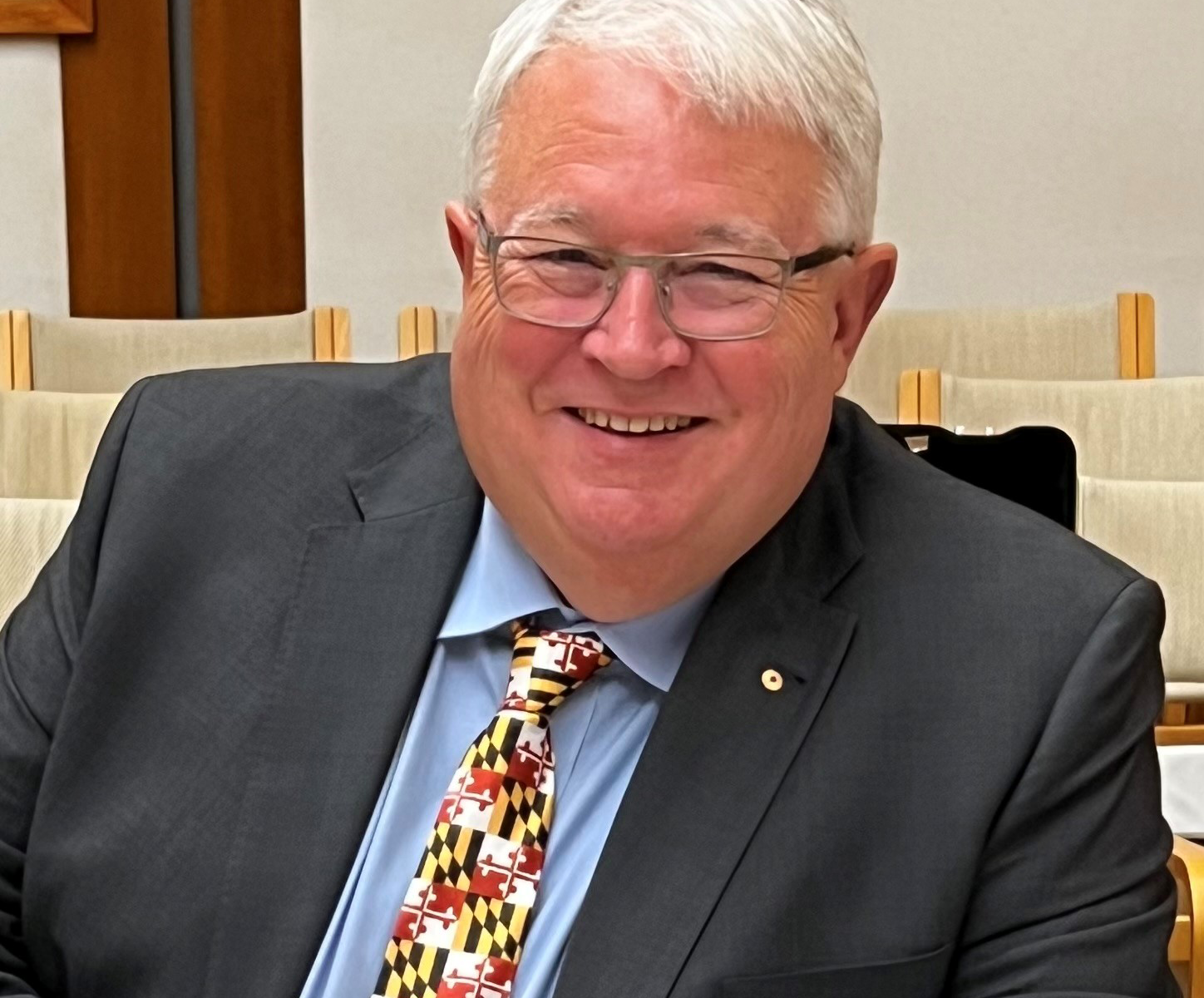
Andrew Metcalfe AO FIPAA
IPAA National President
Former Secretary of the Department of Agriculture, Fisheries and Forestry


